
Dear Friends of Bridgeway,
Happy New Year! Looking back over the past few years, the Hong Kong shop market has experienced a cold winter, with transaction volumes shrinking and prices and rents declining simultaneously. However, the market is quietly brewing a turning point. According to data from the Rating and Valuation Department, shop prices have generally adjusted by over 40% from their peak in 2019, with declines being even more significant for individual urgent-sale or bank-owned properties. Although pessimistic sentiment pervades the market, multiple key indicators suggest that the Hong Kong shop market is expected to bottom out and rebound in 2026. Below are ten reasons detailing the basis for the market's turnaround.
Ten Foundations for the Market Turnaround
1. Continued Growth in Retail Sales Value, Laying the Foundation for Recovery
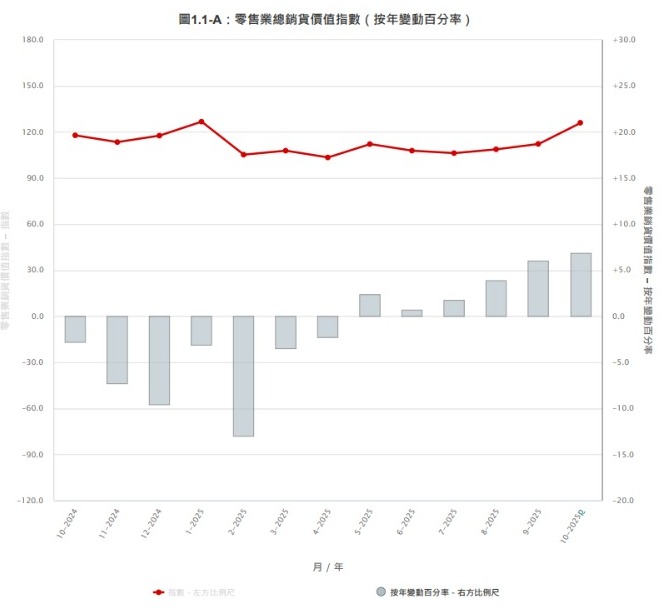
Hong Kong's total retail sales value has recorded increases for six consecutive months, and the upward trend is expected to continue. Historical data shows that as long as there is a sustained surge in retail sales, shop prices and rents usually follow suit. Although there are still cases of owners urgently selling in the current market, value troughs that have "overshot" the decline have emerged.

2. US Interest Rate Cut Cycle Imminent, Global Cost of Capital Declining
The market generally expects the US Federal Reserve to start cutting interest rates in 2025, and the policy direction becomes clearer after the new chairman takes office. The downward trend in global interest rates will directly reduce the cost of capital in Hong Kong, boost overall investment sentiment, and benefit the valuation of commercial property assets.
3. Mortgage Policies Suppress Demand; Relaxation Will Release Purchasing Power
Currently, Hong Kong banks are still strict in approving mortgages for industrial and commercial shops, with buyers mostly needing to enter the market with cash, suppressing short-term transactions. This precisely creates pent-up demand. Once banks gradually relax lending conditions after the market stabilizes, the accumulated purchasing power will drive market transaction activity.
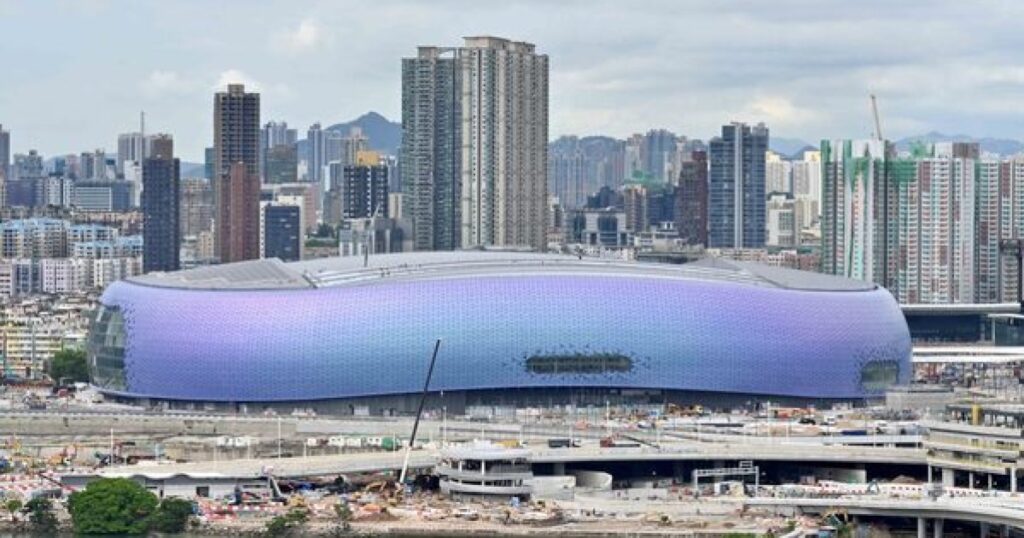
4. Visitor Arrivals Steadily Rebound; "Mega Event Economy" Activates Foot Traffic
The number of visitor arrivals to Hong Kong continues to recover. The SAR government is vigorously promoting the "mega event economy," including regular firework displays, large-scale music festivals, and international sports events. These activities effectively boost street foot traffic, especially promoting the night economy, with shops being the most direct beneficiaries.
5. "Multiple Entry" Policy Expected to Expand; Huge Potential from Greater Bay Area Tourists
The "multiple entry" policy for Shenzhen residents has been implemented for over a year and operates smoothly. The market expects that this policy may be extended to other cities in the Greater Bay Area in 2026. The population base of over 87 million in the region will bring huge and stable consumer spending to the Hong Kong retail market.
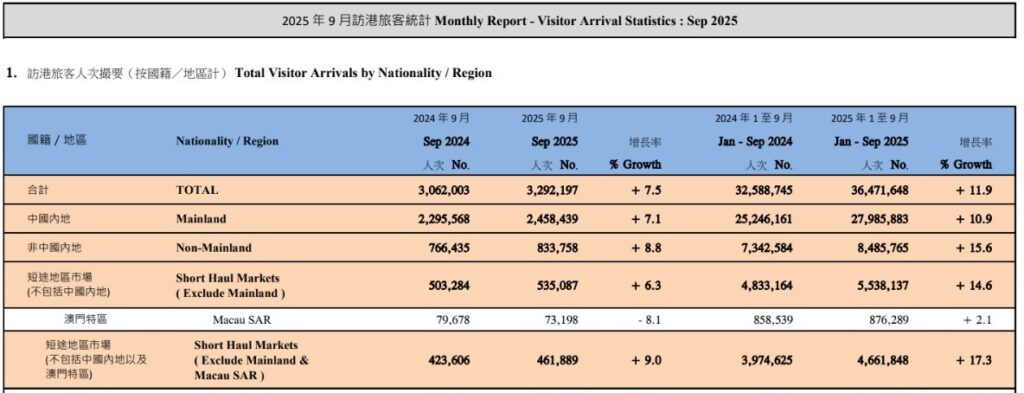
In September 2025, visitor arrivals to Hong Kong continued to increase year-on-year, reaching 3,292,197, a year-on-year increase of 7.5%
6. Guangdong Vehicles Southbound" Launched, Driving a New High-Consumption Model
Since the end of 2025, the "Guangdong Vehicles Southbound" scheme has been implemented. Self-driving tourists visiting Hong Kong with their families cover expenses including shopping, dining, and car services, representing a high-consumption model. Although the policy has quotas initially, long-term relaxation will further stimulate the local retail and service industries.
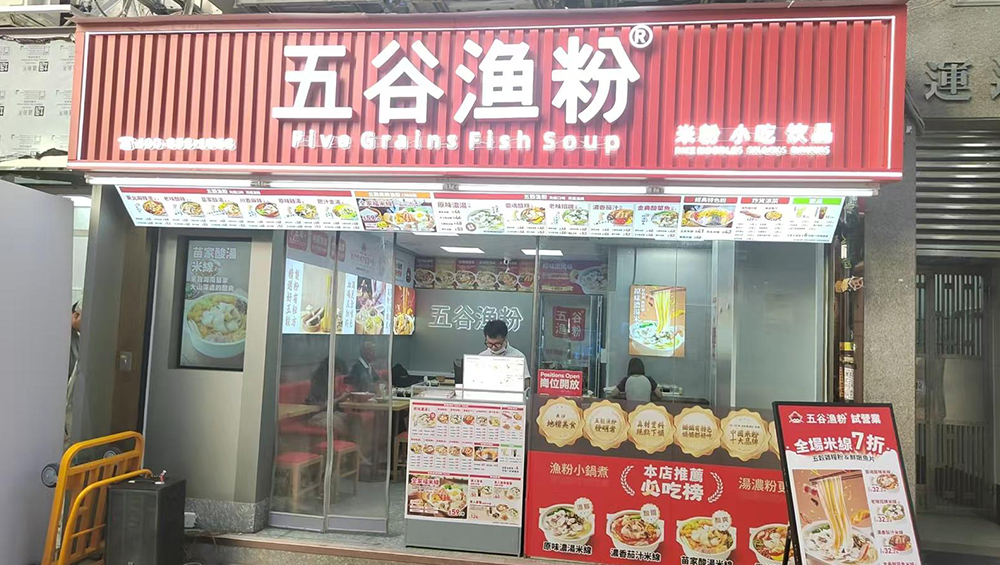
7. Mainland Brands Actively Expand into Hong Kong, Supporting Rents and Market Sentiment
More and more well-known mainland brands regard Hong Kong as the "first stop" for internationalization or a brand display window, and are opening flagship stores. These new tenants are willing to pay reasonable market rents, which not only supports shop rental values but also injects new commercial vitality into streets in various districts.
8. Residential Market Recovers; Funds Expected to Flow Back to Shops
Recently, transaction activity in the residential market has picked up, and prices have stabilized. In comparison, the rental yield in the shop market is generally 2 to 3 percentage points higher than in the residential sector. As confidence in the residential market recovers, some investors will refocus on the industrial and commercial shop market, which offers better returns, guiding funds back.
9. Selling Pressure on Large Owners Eases; Market Supply Becomes Healthier
For some time, some large developers or investors reduced their holdings of shop assets due to capital turnover needs. As the overall property market sentiment improves, their cash-out pressure has lessened. The number of "urgent-sale" properties on the market has decreased, helping to stabilize prices.
10. Diversification of Shop Tenant Structure; Finance, Education, Healthcare as New Drivers
In recent years, new tenants in the shop market are no longer limited to traditional retail; more come from high-growth sectors such as financial services, professional education, and medical healthcare. The expansion of these industries is not fully reflected in total retail sales statistics, implying that actual demand for shops may be stronger than official data suggests.
Latest Market Information
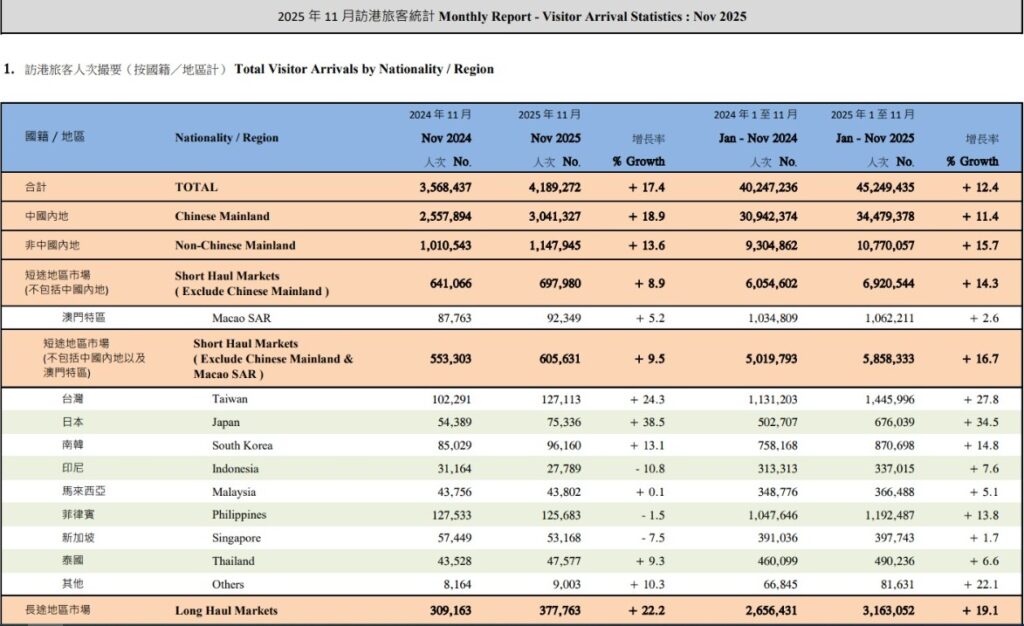
1. In November 2025, visitor arrivals to Hong Kong continued to increase year-on-year, reaching 4,189,272, a year-on-year increase of 17.4%.
2. The total retail sales value in October 2025 was HKD 35.2 billion, an increase of 6.9% compared to the same month in 2024. The total retail sales volume in October 2025 increased by 5.3% compared to the same month in 2024.
Comparing October 2025 with October 2024, the sales value increased for most retail categories. Larger increases were seen in electrical goods and other consumer durable goods not elsewhere classified (+24.6%); other consumer goods not elsewhere classified (+9.7%); jewellery, watches and clocks, and valuable gifts (+9.5%); and food, alcoholic drinks and tobacco (+6.0%).
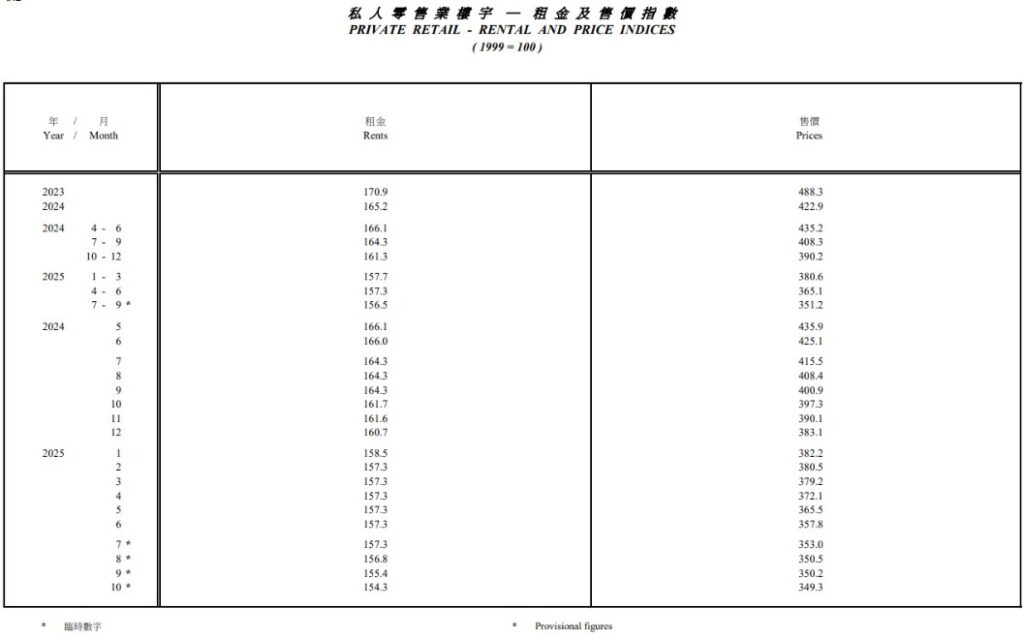
3. In October 2025, the Private Retail – Rental Index and Price Index were largely flat, reported at 154.3 and 349.3 respectively.


 English
  繁中
繁中  简中
简中